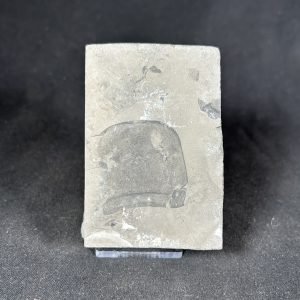
Trilobite fossils are among the most beloved and widely collected prehistoric invertebrate specimens available, representing one of the most successful and diverse animal groups ever to have lived on Earth across nearly 300 million years of evolution.
Quick Facts
| Common Name: Trilobite | Scientific Name: Various — Elrathia, Isotelus, Paradoxides, Phacops | Meaning: Three lobed (referring to the three-part body division) |
| Period: Cambrian to Permian (521-252 million years ago) | Diet: Omnivore | Size: Very Small to Large |
| Length: 1 mm to 72 cm depending on species | Weight: Under 1 lb for most species | Named by: Various authors from 1698 onwards |
Overview
Trilobites were among the most successful animals in the history of life on Earth, thriving in the world’s oceans for over 270 million years from the Cambrian through the Permian periods. They were marine arthropods related to modern insects, spiders and crustaceans, with a distinctive three-lobed body divided into a head shield, segmented thorax and tail section. Over 20,000 species have been identified making them one of the most diverse groups of extinct animals known to science. They are found on every continent and range in size from microscopic to over 70 cm long. Utah’s House Range and Wheeler Formation have produced some of the finest Cambrian trilobite specimens in the world.
Remarkable diversity
The Natural History Museum notes that trilobites ranged from the size of gnats to larger than lobsters, from perfectly smooth to spectacularly spiny. They were among the first animals to evolve complex eyes — compound eyes in some cases formed of calcite crystals. About 20,000 species are known across 270 million years. The Royal Tyrrell Museum’s First Life exhibit covers the Cambrian origins of trilobites, including the extraordinary Burgess Shale fauna of British Columbia — a UNESCO World Heritage Site.
What to Look For
Trilobites vary enormously by species but all share the distinctive three-lobed body plan with a raised central axial lobe flanked by pleural lobes on each side. Look for the distinctive head shield with its raised central glabella and eye lobes when present. Complete specimens with all segments and the tail shield intact are significantly more valuable than partial specimens. Moroccan species often have spectacular spines. Utah Wheeler Formation specimens are typically grey to dark grey. Ordovician Ohio trilobites are often tan to brown. The finest specimens show individual eye facets under magnification.
Fun Facts
Trilobites are the official state fossil of three US states: Ohio, Pennsylvania and Wisconsin. They had complex compound eyes made of calcite crystals, the only animals in history to use minerals rather than organic material for their lenses. Many species could roll into a tight ball for protection similar to modern pill bugs. The largest trilobite ever found was Isotelus rex from Manitoba Canada measuring nearly 70 cm in length. Elrathia kingi from Utah’s Wheeler Formation is the most commonly collected trilobite in the world and has been used in jewelry and decoration for centuries.
Museum Research Articles
Learn more about the Trilobite
- National Park Service: Trilobite — Grand Canyon
- National Park Service: Fossil Arthropods: Trilobites
- Royal Tyrrell Museum: First Life Exhibit
- Natural History Museum of Utah: Fantastic Fossils Reveal Utah’s Cambrian World
- Natural History Museum of Utah: Millard County Cambrian Trilobites
- Britannica: Trilobite
- Natural History Museum London: How Trilobites Conquered Prehistoric Oceans
- National Park Service: National Fossil Day Trilobites