Cave Bear Molar and Partial Jaw
Species: Urus spelaeus
Age: Pleistocene, 42,000 – 100,000 years old
Location: Carpathian Mountains, Romania
As the name suggests, most cave bear remains have been discovered within caves stretching across much of Europe and parts of Asia. The species likely hibernated during the long winters of the last ice age, emerging in spring and summer to raise cubs and gorge on food to stock up for the approaching snow. These were massive animals, measuring 7 feet in length and weighing up to 1,200 lbs, making them similar in size to modern-day grizzly bears. However, unlike grizzlies, Cave Bears are thought to have been mostly herbivorous, eating plants, seeds, fruits, roots, and only occasionally animal protein. It’s now believed that as early human populations grew and began seeking more and more caves for shelter, the loss of suitable hibernation sites, combined with global climate change, marked the end of the cave bear.
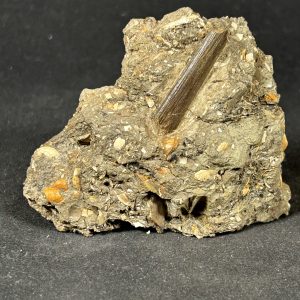
This lower jaw section contains a complete molar in its original position with no repair, restoration, or reattachment. The tooth is in beautiful condition and perfectly showcases the size and power of this animal, even from just a single back tooth.
Cave bear teeth are very hard to come by due to world events in Eastern Europe, which make finding and exporting them tricky. These are in great condition, and the kit is perfect for any serious collector.
Offer includes a custom metal stand and a Certificate of Authenticity