Double Diplomystus Fossil Fish Plate, Green River Formation

$140.00

SKU 260223m Category

Sold

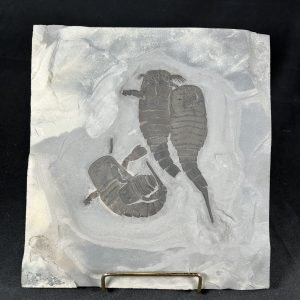
Green River- Double Diplomystus fish plate (260223m)

Species: Diplomystus sp.

Age: Eocene Epoch, 53 million years

Formation: Green River Formation

Location: Kemmerer, Wyoming

The Green River Formation is composed of the remains of an ancient lake bed that crossed multiple states and dried up millions of years ago. The lake contained hundreds of species, ranging from the most common Knightia to gars, freshwater rays, and even crocodiles and bats flying overhead.

Diplomystus are perhaps most similar to modern-day trout or tuna, quick with large mouths to eat knightia, or even other smaller diplomystus. They are easily identified by their puffed-out “chest” and straight backbone compared to the more bullet shaped knightia.


  •  Fish has been sealed and stabilized in the original matrix and has NOT been inlaid. The sealant used for this task appears to have darkened the fish slightly, but this is a normal procedure and will keep the fish from flaking away over time.
  • Offer includes a stand and a Certificate of Authenticity
Weight5 lbs
Dimensions15 × 12 × 12 in

What our customers say

Today I received my Edestus Heinrich shark tooth. I have been hoping to find a reasonably priced specimen for a long time. I am very happy with my purchase. Certificate of authenticity is nice to have. Was very well packed. Furthermore, the included freebie was a nice fossil specimen. Thank you for your consideration and service.

✓ Verified customer

See all customer reviews →

Green River- Double Diplomystus fish plate (260223m)

Species: Diplomystus sp.

Age: Eocene Epoch, 53 million years

Formation: Green River Formation

Location: Kemmerer, Wyoming

The Green River Formation is composed of the remains of an ancient lake bed that crossed multiple states and dried up millions of years ago. The lake contained hundreds of species, ranging from the most common Knightia to gars, freshwater rays, and even crocodiles and bats flying overhead.

Diplomystus are perhaps most similar to modern-day trout or tuna, quick with large mouths to eat knightia, or even other smaller diplomystus. They are easily identified by their puffed-out “chest” and straight backbone compared to the more bullet shaped knightia.


  •  Fish has been sealed and stabilized in the original matrix and has NOT been inlaid. The sealant used for this task appears to have darkened the fish slightly, but this is a normal procedure and will keep the fish from flaking away over time.
  • Offer includes a stand and a Certificate of Authenticity
Weight5 lbs
Dimensions15 × 12 × 12 in