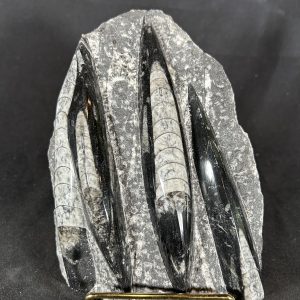
Kettneraspis Trilobite, Bolivia

$140.00

SKU 261022d Category

In stock

Kettneraspis Trilobite, Bolivia

Species: Kettneraspis aracana

Age: Silurian, 425 million years old

Location: Bolivia

Trilobites are an extinct group of marine arthropods that most closely resemble roly-polies (pillbugs) or horseshoe crabs in appearance and ecological niche today. Known as one of the most prolific and prominent groups of animals in prehistory, some collectors devote their entire collections to finding and displaying the many unique, sometimes bizarre species. As one of the first forms of life to develop a compound eye (similar to that of modern flies), these animals could see nearly all 270 degrees around their bodies to hunt food and avoid becoming lunch themselves.

South American fossils are incredibly hard to come by in recent years due to an export ban; these fossils come from an old collection and thus predate any ban on their sale, making this a fantastic opportunity to add one to your collection.

This species is best known for its long spines, which stretch the entire length of the body and could have been used for defense, like a lionfish, or for mating displays like modern peacocks.


Item includes a protective case and a Certificate of Authenticity.

Weight4 lbs
Dimensions8 × 6 × 6 in

What our customers say

I am not usually the person to take time to review a business; however you guys deserve it! I have ordered several times in the past couple years and am routinely very pleased with what I receive. The quality of the fossils is fantastic and your customer service is great. Thank you for continually providing a great experience.

✓ Verified customer

See all customer reviews →

Kettneraspis Trilobite, Bolivia

Species: Kettneraspis aracana

Age: Silurian, 425 million years old

Location: Bolivia

Trilobites are an extinct group of marine arthropods that most closely resemble roly-polies (pillbugs) or horseshoe crabs in appearance and ecological niche today. Known as one of the most prolific and prominent groups of animals in prehistory, some collectors devote their entire collections to finding and displaying the many unique, sometimes bizarre species. As one of the first forms of life to develop a compound eye (similar to that of modern flies), these animals could see nearly all 270 degrees around their bodies to hunt food and avoid becoming lunch themselves.

South American fossils are incredibly hard to come by in recent years due to an export ban; these fossils come from an old collection and thus predate any ban on their sale, making this a fantastic opportunity to add one to your collection.

This species is best known for its long spines, which stretch the entire length of the body and could have been used for defense, like a lionfish, or for mating displays like modern peacocks.


Item includes a protective case and a Certificate of Authenticity.

Weight4 lbs
Dimensions8 × 6 × 6 in