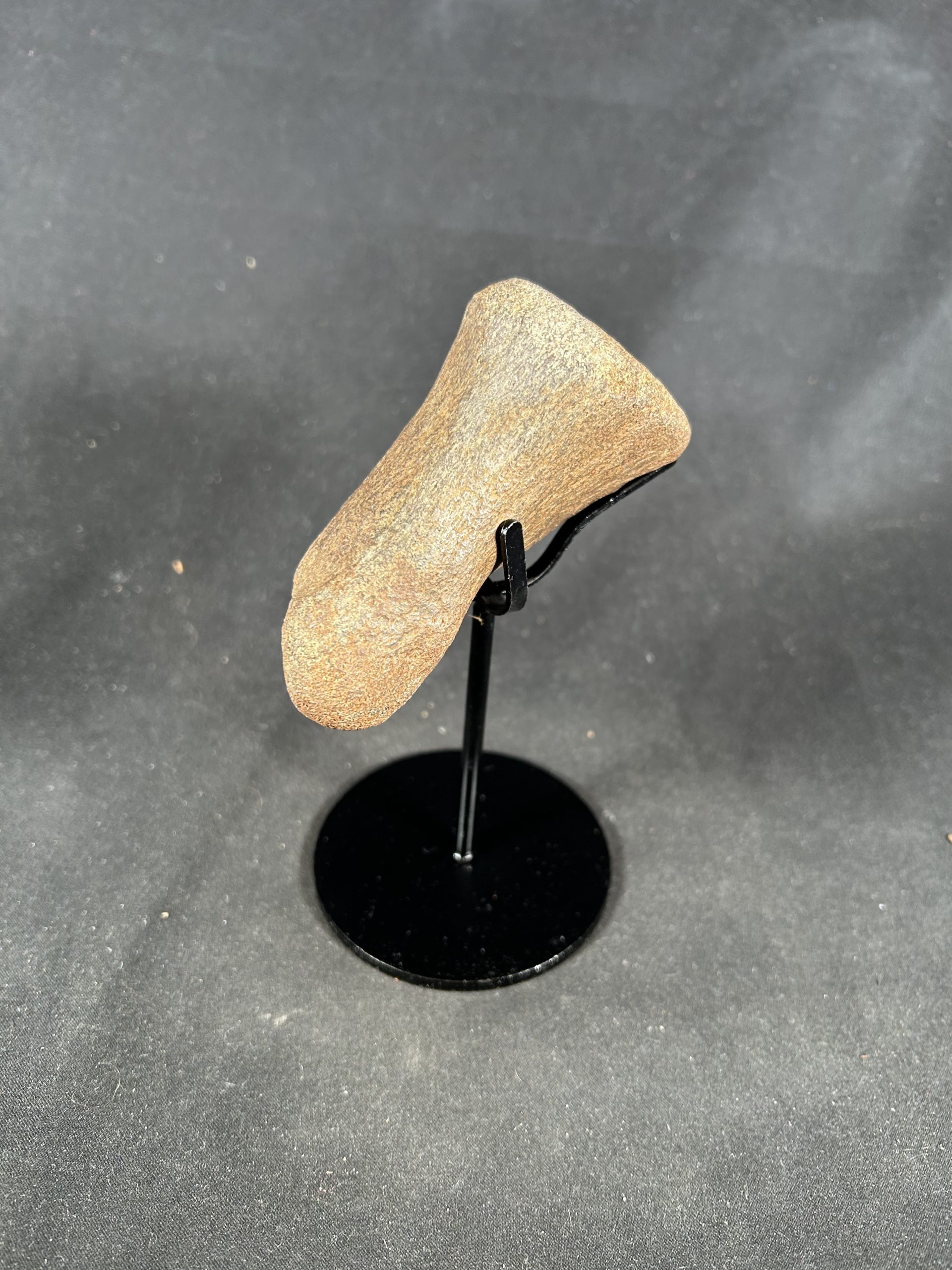
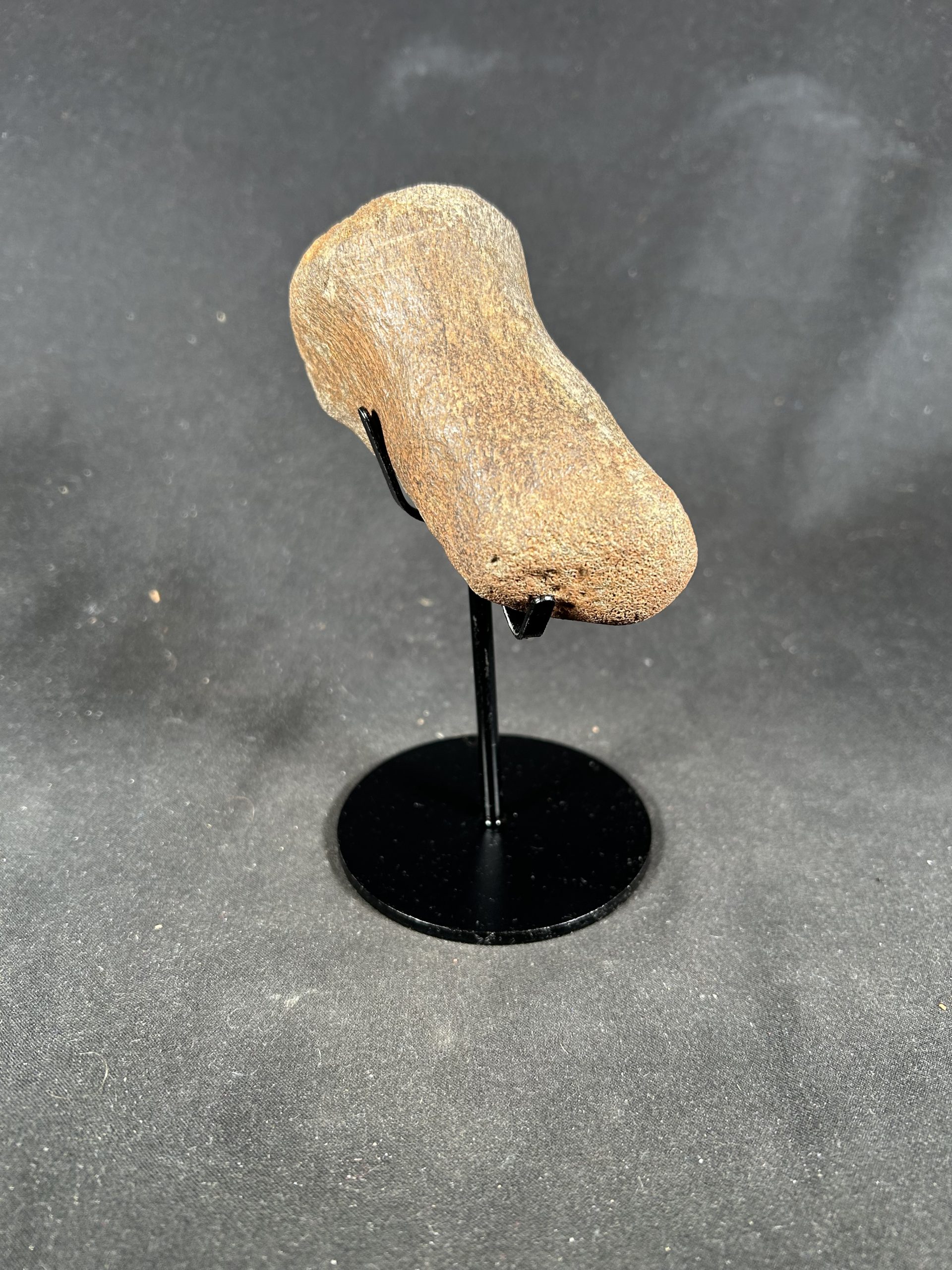
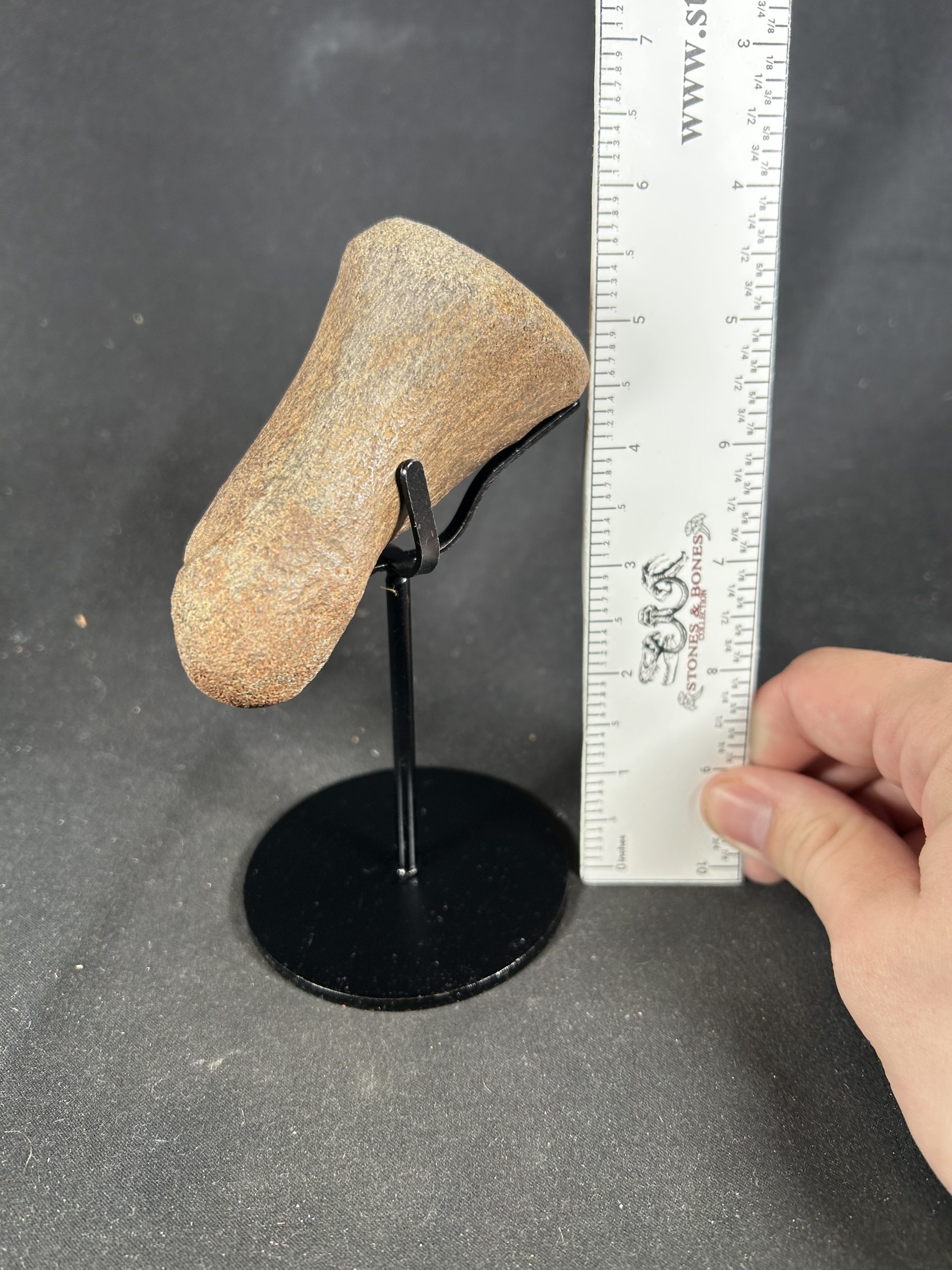
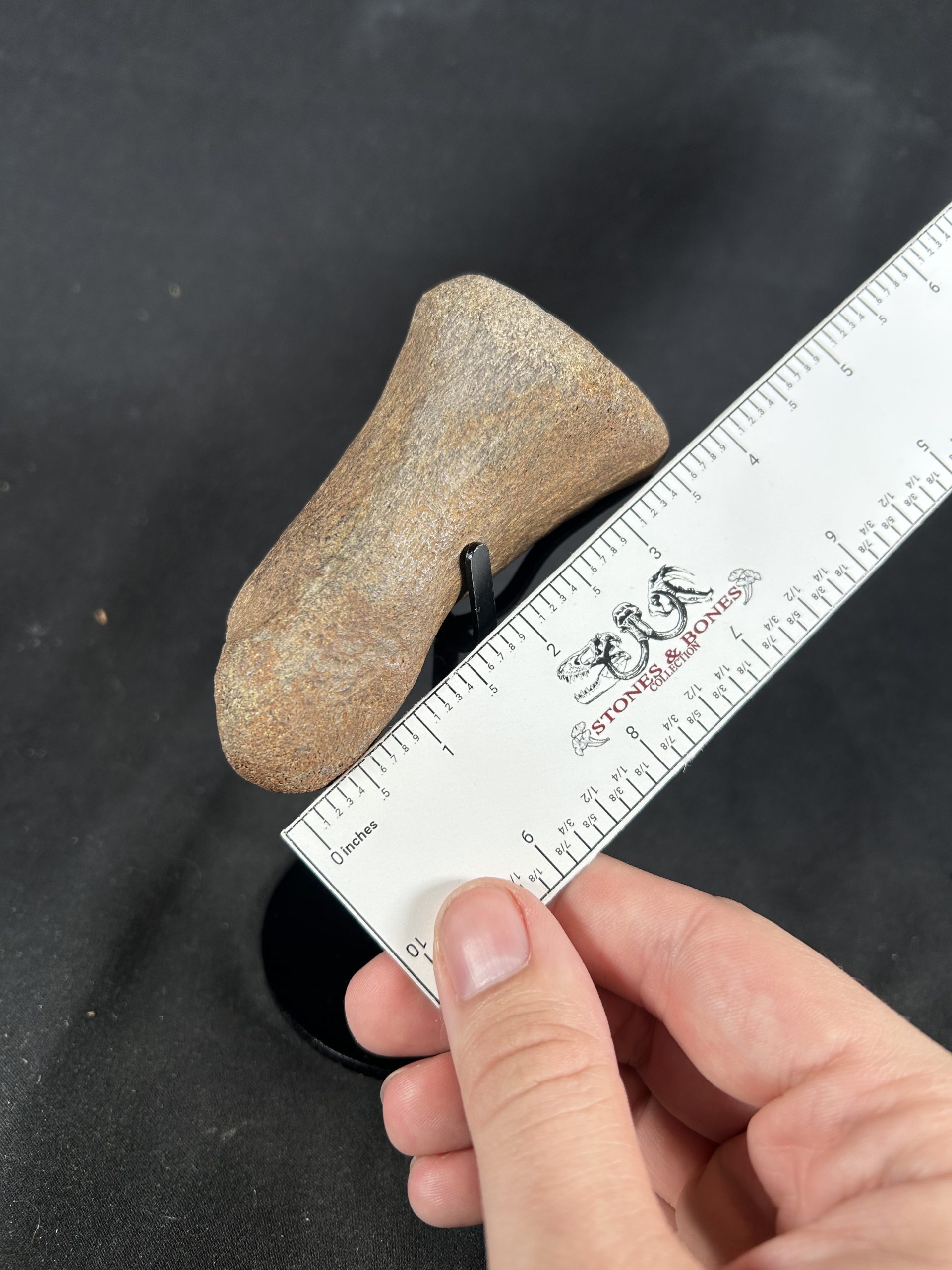
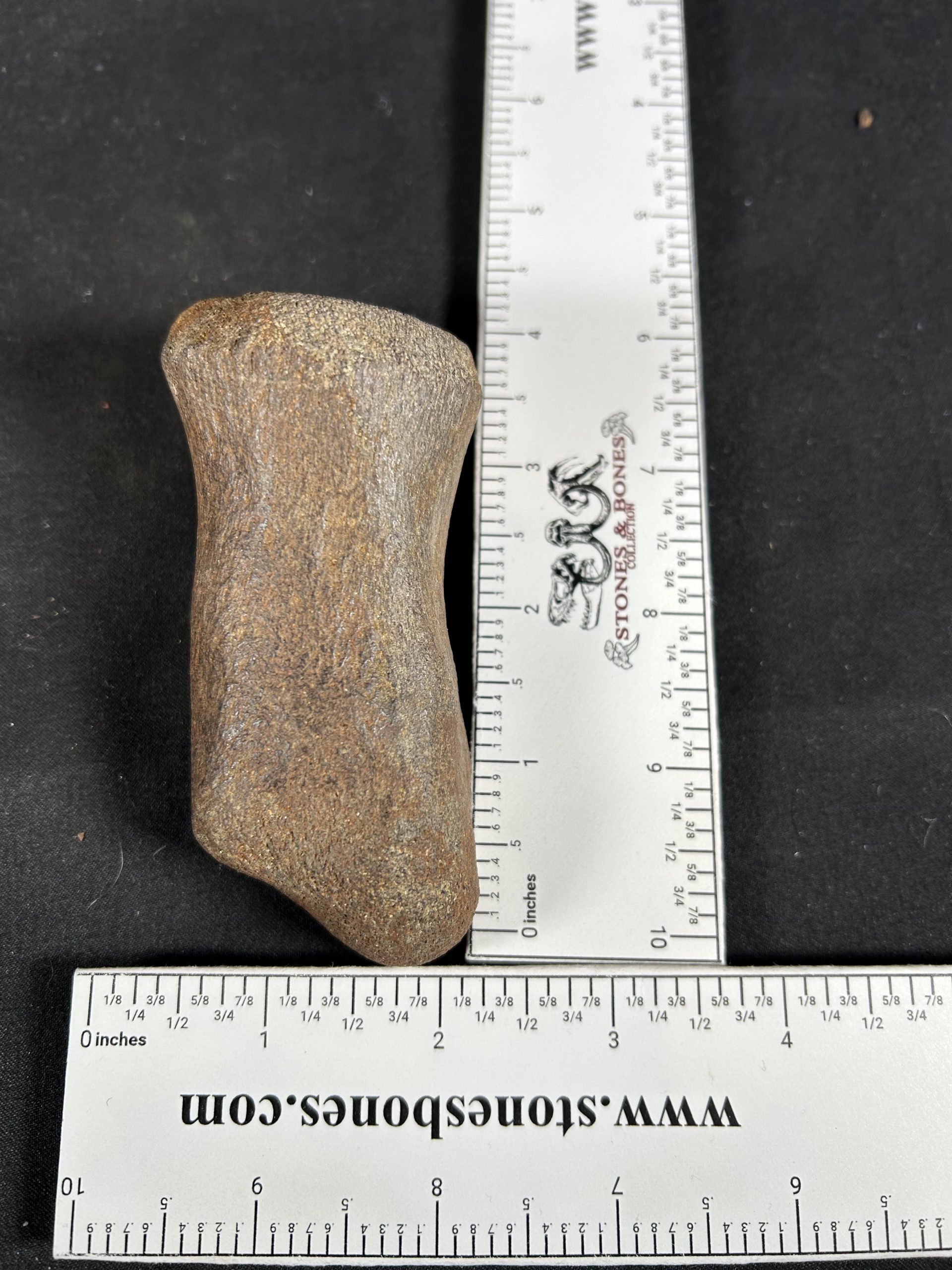
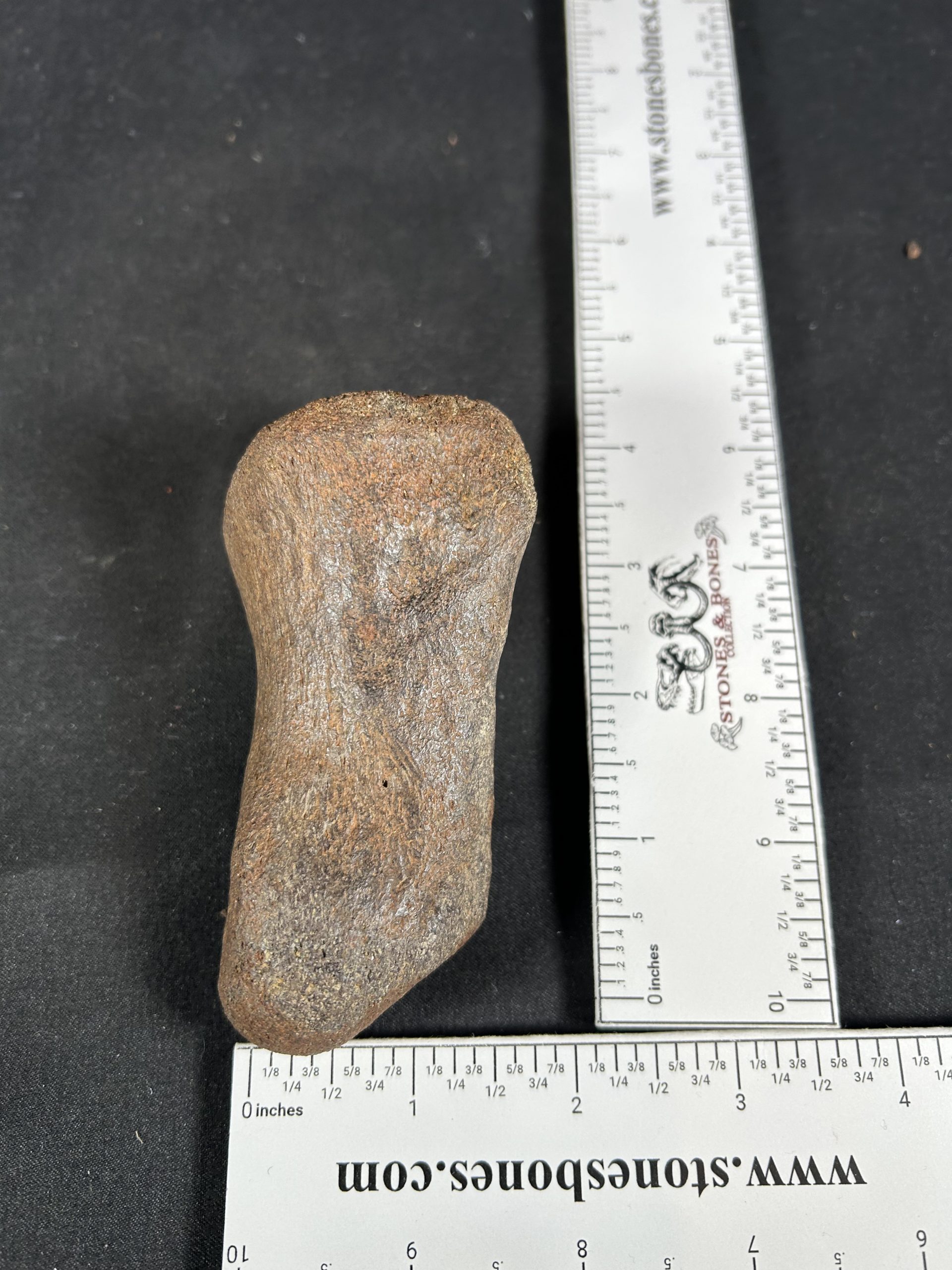
Styracosaurus Toe Bone

$250.00

In stock

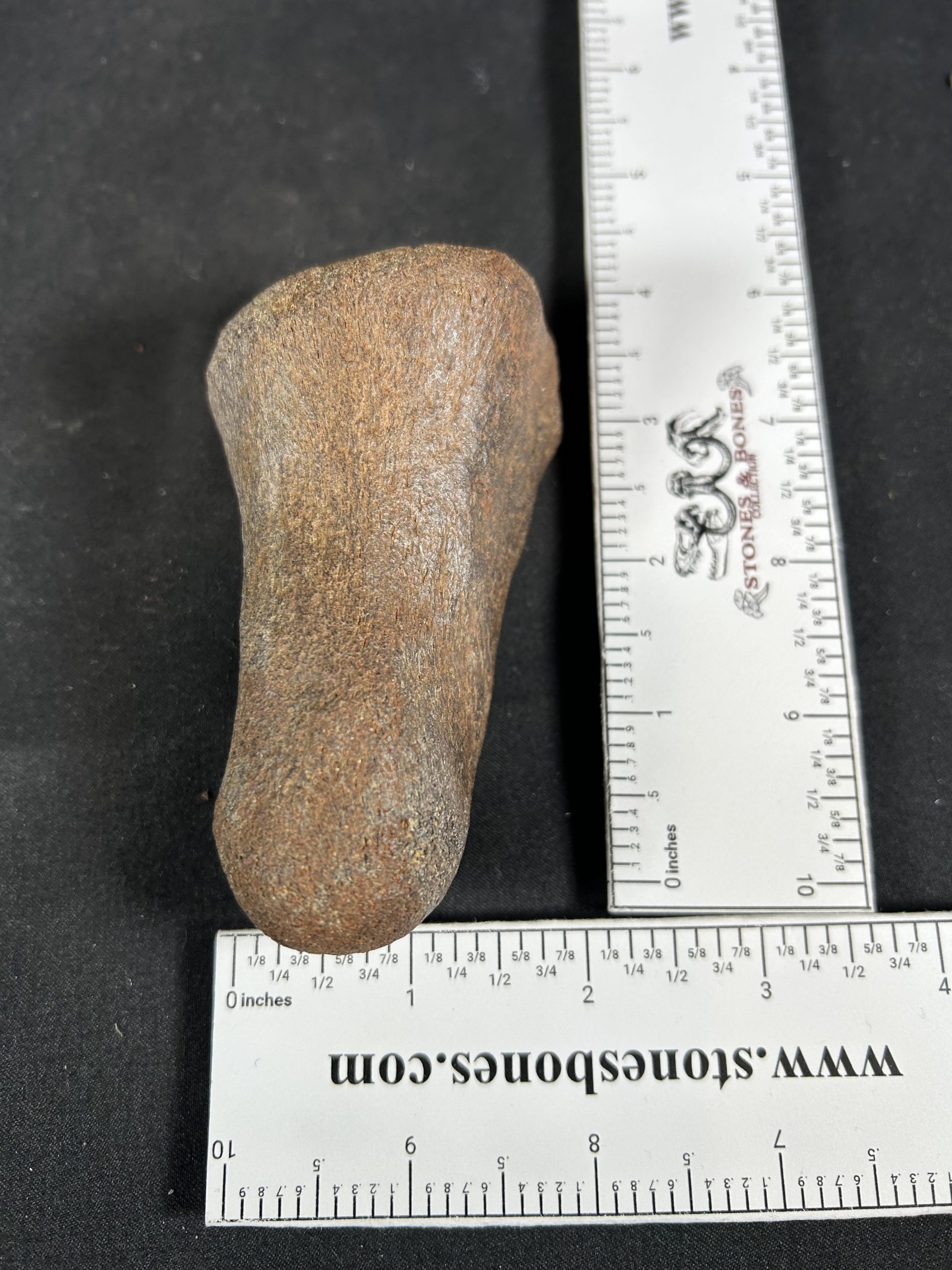
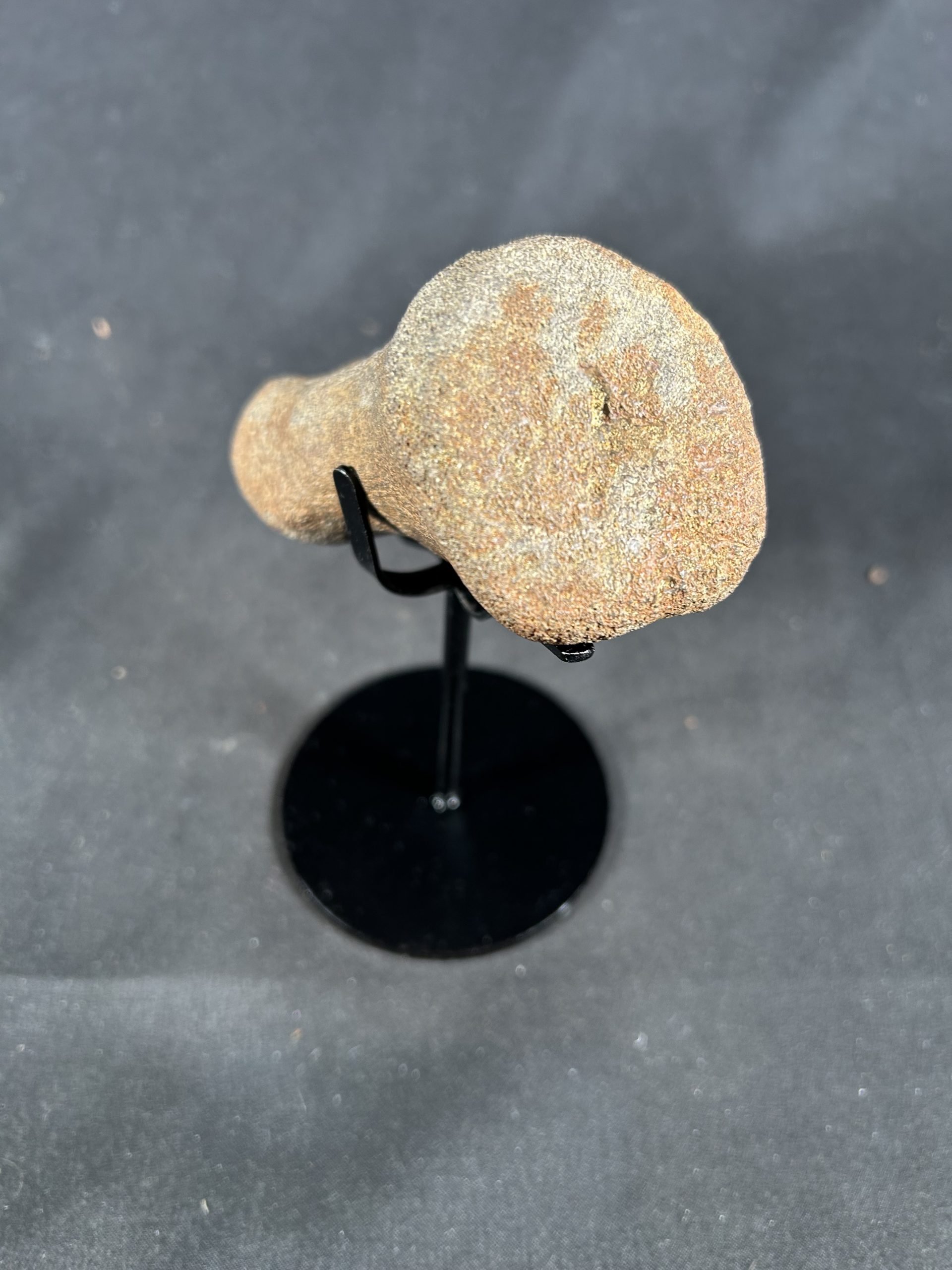
Styracosaurus Toe Bone

Species: Styracosaurus ovatus

Age: Cretaceous, 74-78 million years old

Location: Montana, USA

Formation: Two Medicine Formation

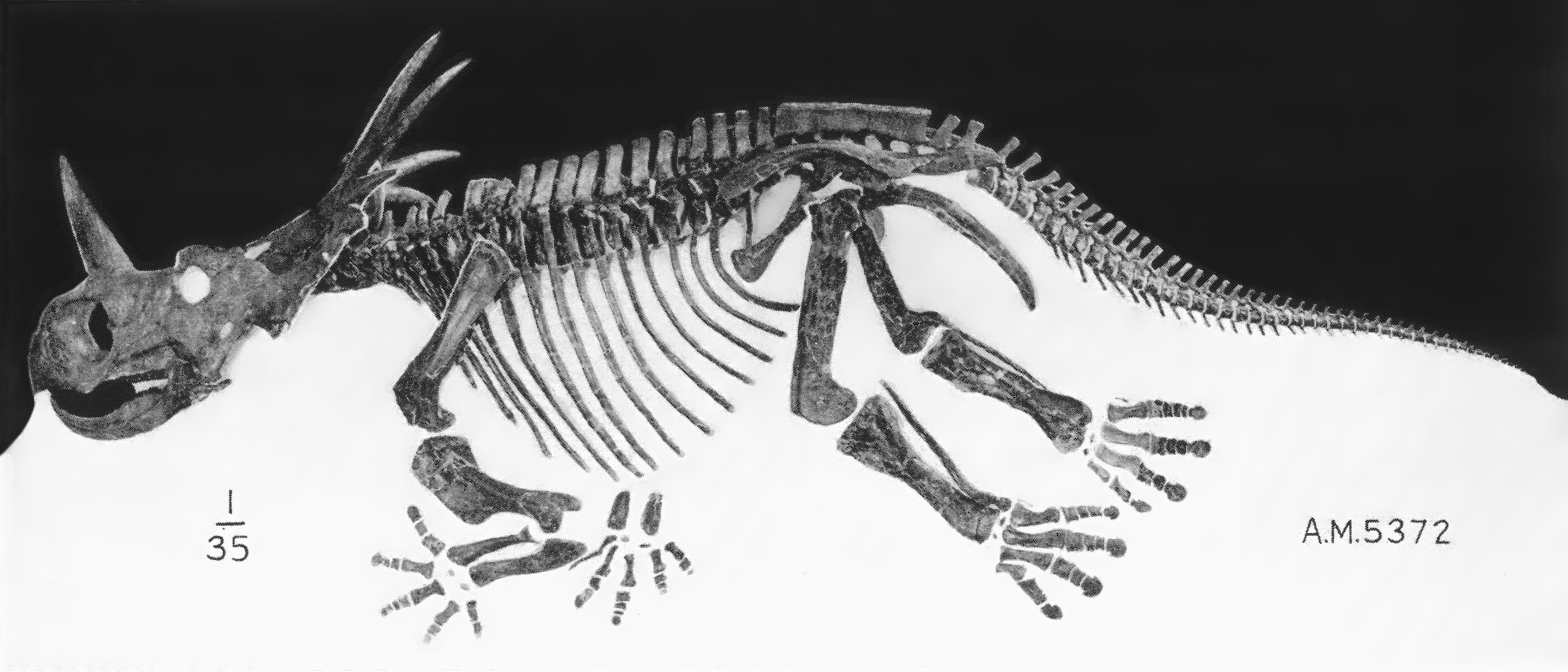
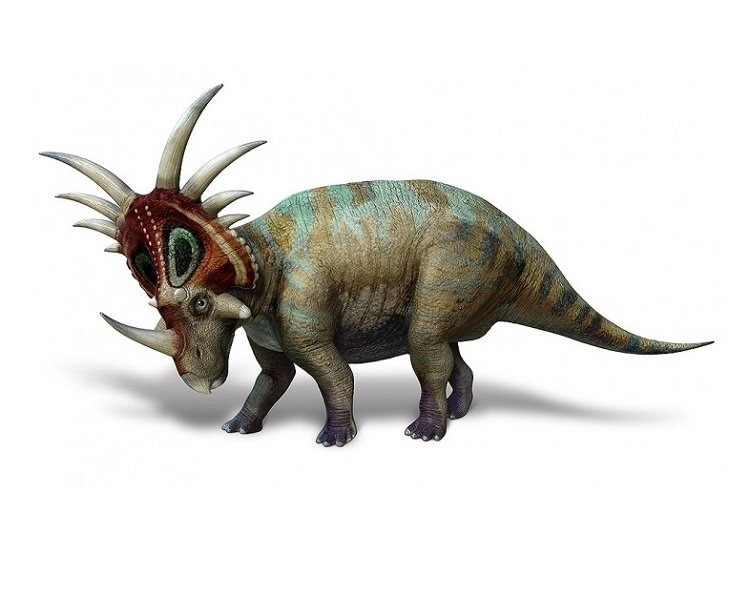
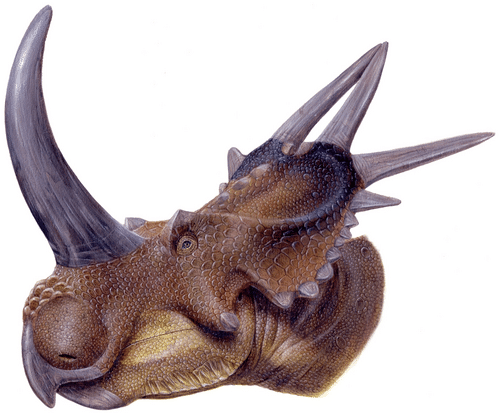
Meaning “spiked lizard”, aside from Triceratops, Styracosaurus is one of the most recognized ceratopsians due to its ornate and spiked frill, giving it both its name and iconic silhouette. This species of Styracosaurus is found only in the Two Medicine Formation of Montana, and differs from its larger cousin, Styracosaurus alterbensis only slightly. In ovatus, the top two spikes converge, creating a triangle shape at the top of the frill in the negative space between them, whereas in albertensis, the spikes face away from each other, creating a “V” shape.  (see gallery for examples with albertensis first and ovatus second)

This toe bone appears to be from one of the outer digits of the front foot of the animal due to its thin size and shape. It’s also possible that this was a juvenile or subadult.

This fossil was found on private land in areas otherwise inaccessible to the public and prepared by the discoverers, who are also expert preparators and friends of ours.

Comes with a custom metal stand and a Certificate of Authenticity
Weight6 lbs
Dimensions12 × 8 × 6 in

What our customers say

Great news. The two boxes arrived safely. Both of the pieces look even BETTER than I expected. Very, very nice specimens, indeed. They will get the best place in my living room.

✓ Verified customer

See all customer reviews →

Styracosaurus Toe Bone

Species: Styracosaurus ovatus

Age: Cretaceous, 74-78 million years old

Location: Montana, USA

Formation: Two Medicine Formation

Meaning “spiked lizard”, aside from Triceratops, Styracosaurus is one of the most recognized ceratopsians due to its ornate and spiked frill, giving it both its name and iconic silhouette. This species of Styracosaurus is found only in the Two Medicine Formation of Montana, and differs from its larger cousin, Styracosaurus alterbensis only slightly. In ovatus, the top two spikes converge, creating a triangle shape at the top of the frill in the negative space between them, whereas in albertensis, the spikes face away from each other, creating a “V” shape.  (see gallery for examples with albertensis first and ovatus second)

This toe bone appears to be from one of the outer digits of the front foot of the animal due to its thin size and shape. It’s also possible that this was a juvenile or subadult.

This fossil was found on private land in areas otherwise inaccessible to the public and prepared by the discoverers, who are also expert preparators and friends of ours.

Comes with a custom metal stand and a Certificate of Authenticity

Weight6 lbs
Dimensions12 × 8 × 6 in