$145.00 – $235.00Price range: $145.00 through $235.00
Stones & Bones Collection sells genuine dinosaur teeth and other fossil teeth, from the cone-shaped teeth of Spinosaurus to horned dinosaur teeth and a duck-billed dinosaur jaw battery. Every fossil is a one-of-a-kind specimen that comes with a Certificate of Authenticity. We have been in the fossil business since 1989, and every listing shows photos of the actual piece, its locality and its condition.
Tooth shape reveals diet. Spinosaurus had smooth, cone-shaped teeth suited to catching fish. Tyrannosaurs had saw-edged, bone-crushing teeth. Plant-eaters such as duck-billed dinosaurs had hundreds of small teeth packed into dental batteries, with new teeth ready to replace worn ones.
Compare size, the condition of the enamel, whether the root is present, any serrations, color and the locality. Ask whether any repair has been done. We disclose both the locality and any repair on every listing.
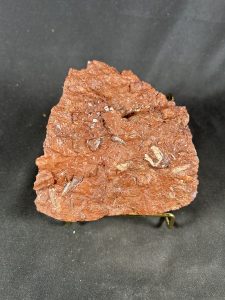
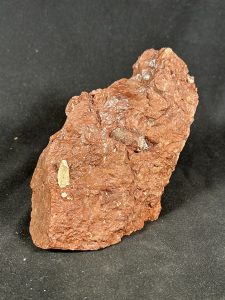
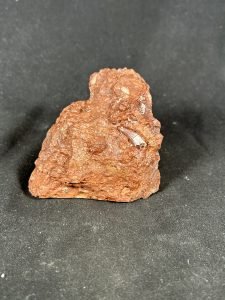
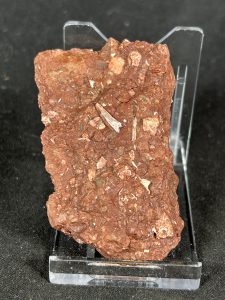
Our current selection includes Spinosaurus teeth in several sizes, a tyrannosaur tooth fragment, Lokiceratops and Chasmosaurus horned dinosaur teeth, an Edmontosaurus jaw battery, and Late Triassic phytosaur, metoposaur and Postosuchus teeth in matrix. We also carry a Mosasaurus and Enchodus bone cluster and a starter fossil kit.
Read more in our Spinosaurus species guide and Gorgosaurus species guide.
Stones & Bones Collection, based in Marietta, Georgia, sells genuine dinosaur teeth and other fossil teeth online and at fossil shows, and has been in business since 1989. When comparing sellers, look for photos of the actual specimen, a stated locality, disclosure of any repair, a Certificate of Authenticity and a clear return policy. We provide all of these.
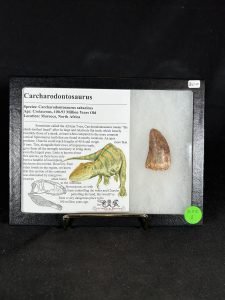
A Spinosaurus tooth is smooth and cone-shaped, straight rather than flattened, and has no saw-like serrations. These teeth suited a long, narrow snout built for catching fish, and Spinosaurus lived in North Africa about 99 to 94 million years ago.
Meat-eater teeth are pointed and built to cut or grip. Tyrannosaurs had saw-edged, bone-crushing teeth, while Spinosaurus had smooth cones for catching fish. Plant-eaters had leaf-shaped teeth with grinding surfaces, and duck-billed dinosaurs packed hundreds of them into dental batteries.
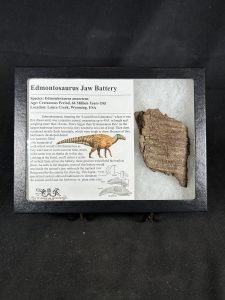
A dental battery is a block of tightly stacked teeth in the jaw of a duck-billed dinosaur, with as many as 200 functional and replacement teeth. As teeth wore down, new ones moved up to take their place. Research suggests the average tooth wore away in under two months, so these dinosaurs went through enormous numbers of teeth.
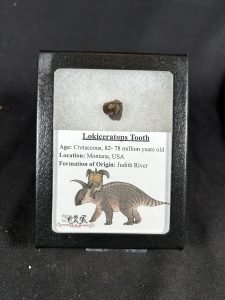
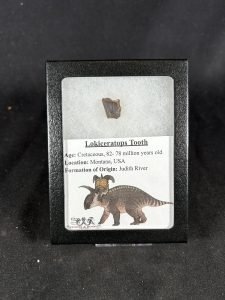
Lokiceratops was a plant-eating horned dinosaur described in 2024 from the Judith River Formation of Montana, about 78 million years old. Its name means "Loki's horned face that looks like a caribou." It lived at least 12 million years before Triceratops.
No. They come from Late Triassic animals that lived alongside the earliest dinosaurs. Postosuchus was a large predator on the crocodile side of the archosaur family tree, a phytosaur was a crocodile-like reptile, and a metoposaur was a large amphibian. We list them with our dinosaur teeth because collectors often look for them together.
Compare the enamel, root, serrations and natural wear, and ask for the locality and any repair history. A reputable seller states these details up front, labels replicas clearly and provides a Certificate of Authenticity. If you are unsure about a piece, message us and we will help.
Yes. Stones & Bones ships worldwide from Marietta, Georgia. Every fossil comes with a Certificate of Authenticity and a 15 day return window. See our company policy page for full details on returns: https://stonesbones.com/company-policy/